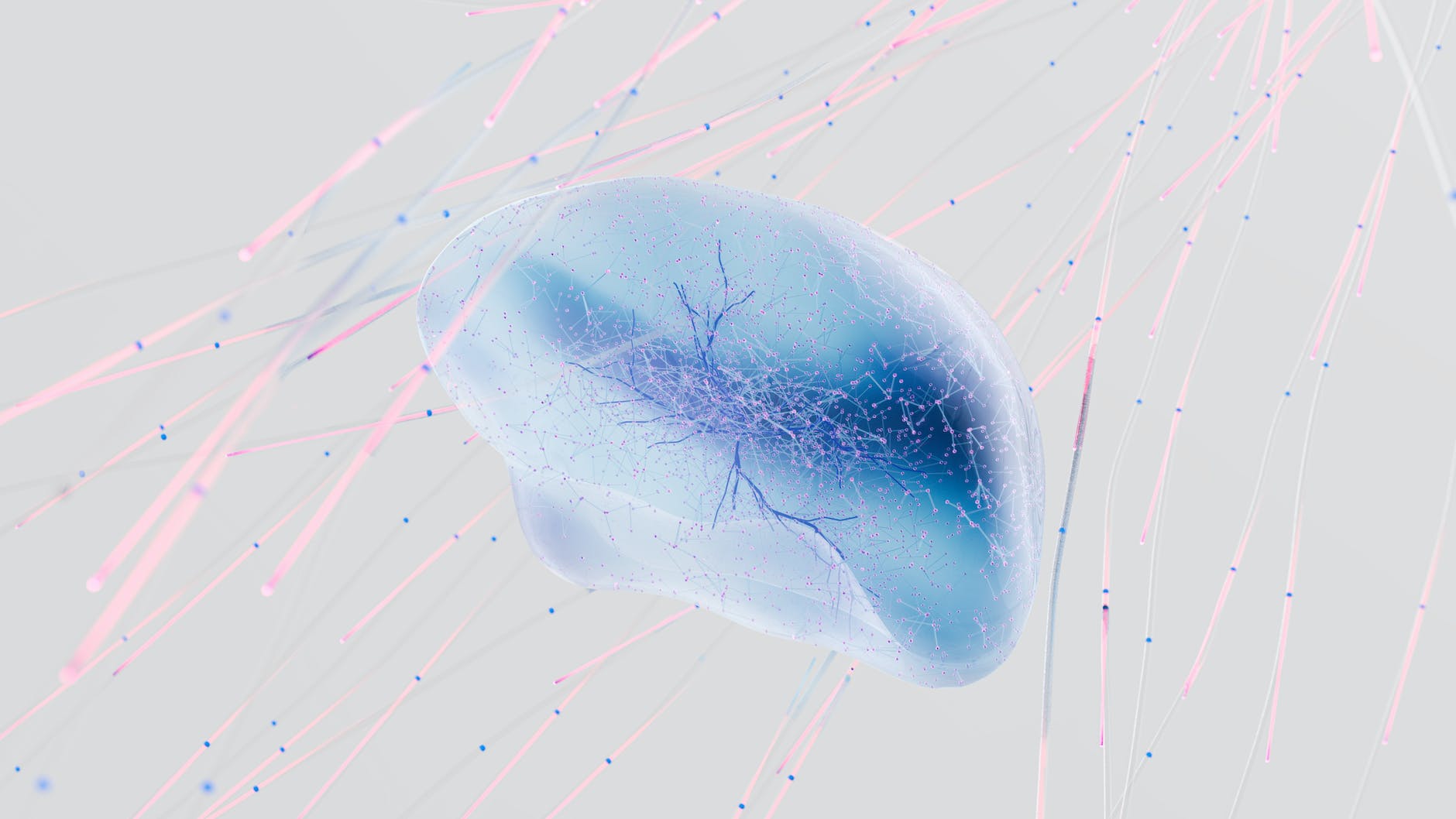
The dual challenge from AI and the cognitive sciences for law and legal (reasoning) practices

What do a man claiming that a brain tumour caused his paedophilic behaviour, an AI system called DABUS being recognised as an inventor for the purposes of a patent application, and the modelling of legal reasoning in computational form have in common? They are examples of developments in and increasing insights from the fields of artificial intelligence and the cognitive sciences that challenge extant legal (reasoning) practices in various ways. This paper proposes an analytical framework for the purposes of situating these different challenges vis-à-vis each other and our legal (reasoning) practices. The aim of this framework is to facilitate understanding how they relate to each other, what it is they really challenge, and to critically reflect on them.

Waltermann A. 2023. The Dual Challenge from AI and the Cognitive Sciences for Law and Legal
(Reasoning) Practices
, in Brigaglia M., Roversi C. (eds.), Legal Reasoning and Cognitive Science: Topics
and Perspectives, «Diritto & Questioni pubbliche», Special Publication, August 2023, forthcoming.
(Preview published online on 19.07.2023)


Exceptions in international law

Photo by SHVETS production on Pexels.com

Exceptions to rules play an important role in law, and in particular in international law. A proper understanding of exceptions is therefore of crucial importance for legal practice, legal doctrine and legal theory. In order to understand the role of exceptions in international law, this chapter – co-authored with Jaap Hage and Gustavo Arosemena – distinguishes between applicability and application of rules. An exception to a rule in a case is defined as the situation in which a rule is applicable to, but nevertheless not applied to, the case. This is possible because the applicability of a rule is merely considered to be a reason for applying the rule, which can be outweighed by reasons against application. This chapter argues that exceptions to rules are made mainly for two purposes: to create a division in the burden of proof, or because the legal consequences of the rule in the case are undesirable. The chapter also discusses techniques used by law to avoid rule conflicts and the need for making exceptions, including subscripting, scope limitations, interpretation, derogation, incorporation and reference, and limitations on rule-creating powers.

Hage, J., Waltermann, A., & Arosemena Solorzano, G. (2020). Exceptions in International Law. In L. Bartels, & F. Paddeu (Eds.), Exceptions in international law (pp. 11-34). Oxford University Press.

Why non-human agency?

In this piece, I focus on the topic of acts of non-human entities and sketch out why I consider this a relevant field of research for academics from law, philosophy, the social and the cognitive sciences.

Waltermann, A. (2019). Why non-human agency? In A. Waltermann, D. Roef, J. Hage, & M. Jelicic (Eds.), Law, Science and Rationality (pp. 51-72). Eleven International publishing. Maastricht Law Series Vol. 14